
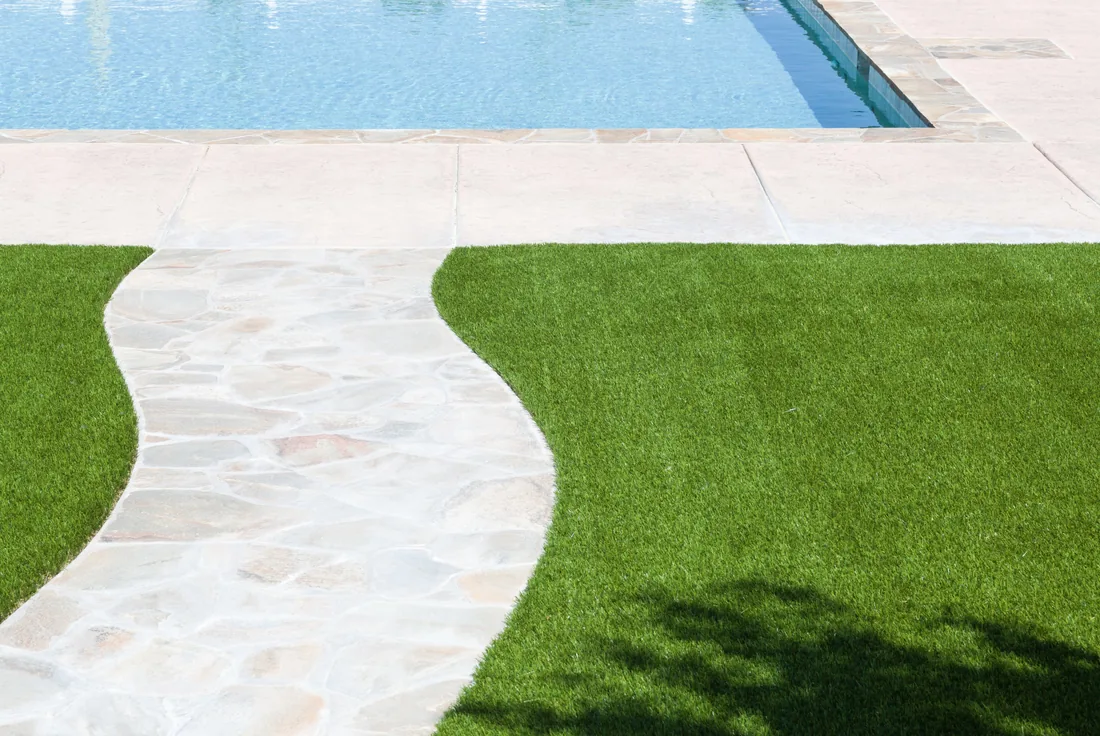
Fall and drainage matter most exactly where the turf meets the coping
Everywhere else in a yard, a slightly imperfect fall can lose itself in a garden bed or a fence line. At a pool, it can't. The coping is a fixed, level, hard edge that can't be reshaped after the fact, so any water that isn't directed away during the base build has one place left to sit: right against that edge, against a structure that's already wet most of the year.
Brisbane's storms make this a sharper problem than it would be in a milder climate. The city's rainfall arrives in short, intense bursts rather than steady drizzle, and a base that looks level on a dry afternoon can still fail to move a genuine downpour fast enough. That's exactly the subject of our storms and drainage material, and it applies at a pool edge with more consequence than it does further from the water: read the fuller drainage breakdown for Brisbane yards before you get a quote for a pool surround specifically.
In practice, that means asking for two things in writing: a stated fall direction around the entire coping, not just an assurance that the turf itself is permeable, and a named destination for the water once it clears the backing. A garden bed, a stormwater point, a specific corner: something you could point at if you walked the yard with the installer.
How the turf is fixed at a hard coping edge
Pegs work where there's ground to pin into. Coping isn't ground, so the fixing method switches to the same approach already used against any hard edge on a standard Brisbane install, such as a concrete slab, a paved path or a driveway line: turf adhesive, typically over a thin foam underlay, rather than mechanical pins. Our guide to how a Brisbane base is actually built covers this fixing detail as part of the full lay sequence, and it's worth reading if you want the step before and after the coping edge itself.
The reason this matters more at a pool than elsewhere is foot traffic and moisture. A coping edge gets walked, wet and dried out again more often than most perimeters in the yard, and a poorly bonded join is exactly what starts to lift first under that kind of repeated cycle. It isn't a different product or a specialty pool-turf system, it's the same concrete-and-paver fixing method used across the estate, applied carefully and with enough adhesive coverage to hold under regular use.
Ask specifically how the installer plans to finish that one edge, separate from the rest of the perimeter. A quote that treats the whole yard as a single line item is more likely to skip the extra care a coping join actually needs.
Backing choice, humidity and the mould risk that comes with both
A pool corner concentrates two things that Brisbane already has plenty of: humidity and, depending on fencing and landscaping, shade. Trade guidance recommends polyurethane backing over latex for humid Australian conditions specifically because it absorbs less moisture and holds its shape better over time; latex is documented to age more rapidly in hot, humid environments, and the same guidance advises against it for a permanent Queensland install. That's a single credible trade source rather than a large body of research, so we'd call it strong practical guidance rather than settled fact, but it's a cheap thing to confirm on a product data sheet before you order.
The backing only handles half the moisture problem, though. The other half is the base underneath it, and this is where the mould risk actually starts. Mould and mildew build up under artificial turf when drainage is blocked or the fall is poor, and that risk climbs wherever shade and humidity combine, which a pool corner tucked behind a fence, a pergola or a screening hedge does more readily than an open lawn. Neither a well-built base nor the right backing substitutes for the other; a Brisbane pool surround genuinely needs both done properly, not one done well and the other assumed.
The honest trade-off: runoff, and what it actually buys you
Consumer body CHOICE reports that artificial turf can produce up to 60 per cent more runoff than natural grass. Around a pool, that figure deserves more attention than it might get elsewhere in the yard, because the coping, any decking and the pool shell itself are already hard, non-absorbent surfaces. Adding a synthetic lawn to that mix means less of a Brisbane storm gets slowed and soaked up on its way off the block, and more of it moves at once toward wherever the yard drains. That's not a reason to avoid the idea, but it is a reason to have the drainage plan answered properly rather than assumed, particularly given how much rain a single Brisbane storm cell can drop in twenty minutes.
What it buys you in return is a genuinely lower-maintenance edge around the water. No mowing hard up against the coping, where a mower or whipper-snipper is the last tool you want near a pool, no clippings blown or tracked into the water, and no muddy strip forming where wet feet cross bare lawn on the way back from a swim. It's a real, if modest, reduction in the mess that ends up either in the pool or walked through the house, and it holds whether the block is an older Queenslander-style yard in somewhere like Chermside or a newer bayside layout in Capalaba, where a higher water table can already slow how fast ground clears after a storm.
Cost, and where the Brisbane water argument actually sits
A pool surround is usually a smaller total area than a full backyard, but it doesn't skip any of the ground work: excavation, base material and compaction still apply along every metre of the coping, so current per square metre pricing for Brisbane installs is the right starting point rather than assuming a small job means a proportionally small price. On a compact area, the fixed costs of getting a crew on site and detailing the coping edge properly can end up a larger share of the total than they would on a big open lawn.
On water: there are no mandatory restrictions in force across the South East Queensland grid at the moment, and no compulsory watering hours, with combined storage sitting at 84.1 per cent as of 9 July 2026. So laying turf around a Brisbane pool isn't a compliance decision the way it might read on a page written for a stricter market. It's a bills and outlook decision: less watering and mowing around a strip of lawn that competes with the pool for attention anyway, set against a drier medium-term forecast. If you're still deciding whether the idea suits your yard at all, the wider Brisbane artificial grass overview is a reasonable place to start before you get to coping-specific detail.
Common questions about artificial grass around Brisbane pools
Does turf around a Brisbane pool need different backing to the rest of the yard?
It's worth paying attention to, yes. A pool surround sits close to standing water and often gets splashed or hosed down more than any other part of the lawn, on top of Brisbane's year-round humidity. Trade guidance points to polyurethane backing for humid Australian conditions: it holds less moisture and is more dimensionally stable than latex, which is documented to age faster in hot, humid environments. That guidance comes from a single credible trade source rather than a wide body of research, so treat it as strong practical advice and ask which backing is in the product you're quoted.
How is artificial turf actually fixed at the edge of the pool coping?
The same way it's fixed against any hard edge on a Brisbane job, such as a concrete slab or paved path: turf adhesive, usually over a thin foam underlay, rather than pegs. Coping is solid and can't be pinned into, so the bond has to do the whole job of holding that edge down. It's the fixing method already used elsewhere on a standard install, not a special pool product.
Will water pool up against the coping after a storm?
It will if the fall isn't built into the base on the day, and a hard, fixed coping edge gives the water less room to disperse than a garden bed or fence line does. Brisbane's storms arrive as short, intense downpours rather than steady rain, so the base around a pool needs a genuine fall and a stated place for that water to go. We cover the base-building side of this properly in our Brisbane storms and drainage material rather than repeating it here.
Can turf near a pool get mouldy underneath?
Yes, and it's a laying problem rather than a cleaning one. Mould and mildew build up under turf when drainage is blocked or the fall is poor, and that risk goes up wherever shade and humidity combine, which a pool corner tucked behind a fence or pergola often does. A correctly built, well-drained base is the fix, and it's decided before the grass ever goes down.
Does artificial turf around a pool send more stormwater off the block?
It can. Consumer body CHOICE reports that artificial turf can produce up to 60 per cent more runoff than natural grass, and around a pool that water is already competing with coping, decking and the pool shell itself, all hard surfaces that shed rather than absorb. On a Brisbane property in a serious downpour that's a genuine trade-off worth knowing before you commit, not a reason to rule the idea out.
Do South East Queensland water restrictions affect the decision to turf around a pool?
Not in the way people often assume. There are no mandatory restrictions in force across the SEQ grid right now, and no compulsory watering hours: the advice to avoid watering between 8am and 4pm is voluntary guidance, not an enforceable rule. Combined storage sat at 84.1 per cent as of 9 July 2026, well above the 50 per cent level that would trigger mandatory restrictions. So around a Brisbane pool this is really a bills and long-term outlook question, given the drier seasons forecast, rather than a compliance one.
What does artificial grass around a pool cost in Brisbane?
Roughly the same per square metre as any other part of the yard, since the coping edge doesn't change the base build much. Supplied and laid, budget product runs about $75 to $95 a square metre, mid range $95 to $130, and premium from around $130 upward. Pool surrounds are usually a smaller total area than a full backyard, so the ground works, edge preparation and fixing detail can end up as a larger share of the total than the grass itself. Our cost guide has the full tier by tier breakdown for Brisbane.
Is artificial turf slippery next to a pool?
We don't hold verified slip-rating or safety-certification data for turf products on this site, so we won't make a claim either way here. If underfoot grip near wet paving matters to you, ask your installer for the specific product's data sheet rather than relying on general marketing about any synthetic lawn.
Does turf around the pool actually mean less mess in the water?
For most households, yes, though it's a genuine time saving rather than a dramatic one. No mowing right up against the coping, no clippings blown or tracked into the water, and no muddy patches forming where bare feet cross wet grass on the way back from a swim. It doesn't remove the need to skim leaves or vacuum the pool; it just takes lawn maintenance out of the equation in that one corner of the yard.
Can I lay the turf around a pool coping myself?
You can, but the coping edge is exactly where a rushed DIY job tends to show first, since it's a fixed, unforgiving line with no soil to hide a wobble in. The base preparation and fall matter as much here as anywhere else on the property, arguably more, given how close it sits to standing water. If you're weighing that up, our guide to how a Brisbane base is actually built walks through what a proper job involves at each stage.
Get a price for turf around your pool
Free and no obligation. Tell us the rough size around the coping and we pass it to one vetted local installer who confirms an exact price after seeing the space.
Get a free, no-obligation quote
Tell us a little about your job and we'll pass it to a vetted local installer.