
Patios, alfresco areas and paved courtyards: Brisbane's outdoor entertaining spine
Base preparation, the excavation, compaction and screeding that a soil install requires, typically accounts for around 60 to 70 per cent of a job's labour and prep cost, according to published Australian industry figures. When a paved alfresco or an existing concrete patio is already sound and reasonably level, that stage is effectively done before the installer arrives. The job becomes preparation and fixing rather than digging and rebuilding, which is a meaningful part of why so much artificial turf goes down over an existing hard surface here rather than beside one.
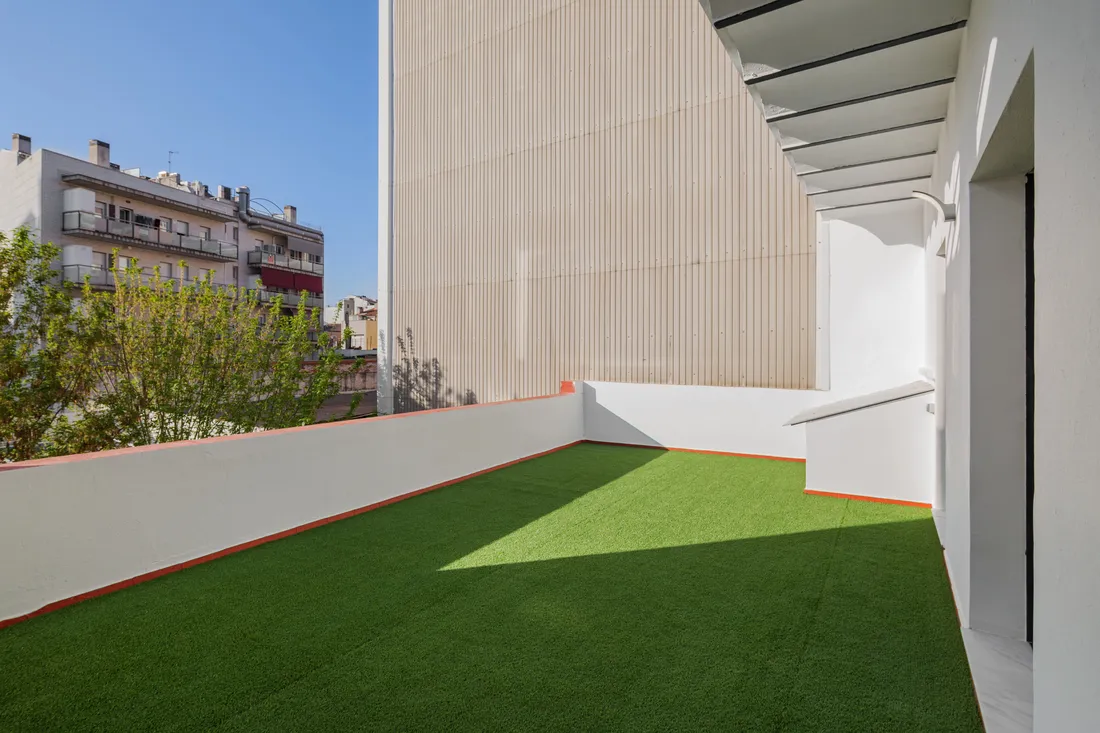
This shows up across very different housing stock. A classic Queenslander's under-roofline alfresco, a high-set home's paved area underneath the house, and a newer paved courtyard off a townhouse in one of the growth-corridor estates all arrive at the same starting point: a hard surface that either works as-is or needs targeted repair before turf goes down, not a backyard that needs digging out from scratch. Where it changes is condition. An older brick patio with a cracked section or a low spot needs that fixed first; a newer paved courtyard often just needs the surface cleaned and checked for fall. Either way, the base cost comparison against a full soil lawn is worth seeing side by side, and our tier-by-tier breakdown of what Brisbane turf actually costs sets that out.
Why fall matters even more on a slab than it does on soil
Brisbane's storm intensity is already the defining factor in how a lawn drains here, and it's a bigger issue again on a sealed hard surface than it is on soil. A soil base still has some absorption even when the fall isn't perfect: water that doesn't run off has somewhere to go, down through the sub-base, into the ground beneath it. A concrete patio or a paved courtyard has none. Every drop of a storm cell has to reach an outlet across the surface itself, a grate, a garden bed, a step down, or an open edge, because there's nowhere else for it to be absorbed. If the fall is wrong, or missing altogether, the water simply sits where it lands.
The test is straightforward and worth doing before a single quote comes in. Hose the whole paved area down on a dry day, roughly the way rain would fall on it, then leave it for twenty minutes and check back. Water visibly heading toward an outlet means the fall is doing its job. Standing water anywhere means that exact spot will hold moisture under the turf every time a storm rolls through, with none of the airflow or drying-out that a shaded soil patch at least gets some of. Combine that trapped moisture with Brisbane's year-round humidity and the consequence isn't just a soggy patch, it's the conditions mould and mildew need to establish underneath the turf, a genuinely different and more persistent problem on a sealed surface than the equivalent issue on soil. Our separate look at storm drainage across a full Brisbane lawn covers the soil side of that story in more depth; this is the paved-surface version of the same climate risk.
Where an existing slab has no usable fall at all, the fix is a drainage job before it's a turf job: a channel or spoon drain cut into the low point, a screed to correct the fall, or in worse cases breaking out and relaying the affected section. That's something to identify at quote stage, not something to discover the first time it rains properly after the turf is down.
Fixing turf to a hard surface: adhesive instead of pegs
A soil lawn is held at its edges mechanically, pegs driven into the compacted base at regular intervals as the turf is stretched into place. Concrete and pavers remove that option. There's nothing to peg into, and drilling and plugging every 300 to 400mm around a slab is slow, looks rough at the finished edge, and on a raised deck or balcony risks going straight through a waterproof membrane doing a far more important job than holding down a lawn.
Hard-surface jobs are bonded instead of pegged: turf adhesive along the full perimeter and every join, fibres kept clear of the glue line so the seam disappears once it's brushed through, typically over a foam underlay of around 5mm. That underlay does double duty, it takes the hardness out of bare concrete underfoot and it smooths over trowel marks or slightly uneven paver joints so they don't telegraph through the finished surface. How much of the field beyond the perimeter gets glued usually comes down to exposure: a patio tucked under a roofline needs less adhesive coverage than an open, elevated deck where wind can get under an edge and lift it.
If you're weighing a hardware-store roll against a properly fixed trade job for a paved area, that's exactly where the gap tends to show. A wobbly adhesive line or a join that lifts within a season is one of the more common outcomes of a rushed DIY attempt on a hard surface, and our comparison of a Bunnings roll against a professional supply-and-install job goes through where that line sits for concrete and paved jobs specifically. For a soil yard rather than a slab, the running order changes at the base stage, which our guide to laying artificial grass on a prepared base covers in sequence.
Heat on a paved patio or courtyard
Artificial turf runs hotter than living grass everywhere it's laid, and that effect gets worse over concrete or pavers specifically, because the slab absorbs heat through the day and re-radiates it back up into the turf sitting on top of it. The same product will run noticeably warmer over a paved alfresco than it would over prepared soil in the same yard, and it stays warmer later into the evening once the sun's gone. Manufacturers including TigerTurf acknowledge synthetic turf gets warm in direct sun and point to shade, hosing the surface down before use, and a lighter yarn colour, which runs cooler than a dark green as a matter of straightforward physics, as practical ways to manage it.
An unshaded, west-facing paved courtyard that catches full Brisbane afternoon sun is the hardest version of this to manage, and it's worth planning shade, whether that's an umbrella, a sail, or simply timing outdoor use around the worst of the afternoon, into the job from the start rather than adding it as an afterthought. Some suppliers market cooling yarns or evaporative infills with specific percentage reductions attached; treat those figures as the supplier's own claim rather than an independently verified number, and ask for the data sheet behind any number like that before you rely on it.
Balconies and body corporate approval in apartment and townhouse living
Brisbane's apartment and townhouse growth, Chermside's high-density boom around Westfield is a clear example, has put a lot more balconies and small shared courtyards into the mix alongside classic Queenslander backyards. For that kind of space specifically, council generally isn't the relevant authority. A balcony or a shared courtyard in a body corporate scheme is typically governed by that scheme's by-laws covering alterations, floor coverings and anything that could affect a waterproof membrane, and those rules vary from building to building. We haven't verified a specific piece of Queensland legislation governing this, so we won't state one; what we can say plainly is check with your body corporate in writing before you order anything, and keep the reply on file. If you're renting, that's on top of, not instead of, your landlord's written approval.
None of that is a reason to avoid a balcony install. Plenty go ahead every year across Brisbane's newer apartment stock. It's simply the step that belongs before the space gets measured, not after the turf turns up and there's nowhere to put it.
Concrete, paving and balcony questions Brisbane homeowners ask us
Can artificial grass go straight over an existing patio, alfresco slab or paved courtyard?
In most cases, yes. A huge share of Brisbane's outdoor entertaining space, the paved alfresco off the back of a high-set Queenslander, a post-war brick home's concrete patio, the paved courtyard attached to a townhouse in a newer estate, was built as a hard surface from day one and was never meant to carry a lawn. Turf doesn't need soil to sit on. It needs a slab or paving that's structurally sound and that actually sheds water somewhere. If your existing surface does both of those things, you skip the excavation and base-building stage entirely, which is normally the biggest single chunk of a soil-based job.
How do I check whether my slab or pavers drain well enough for turf?
Run a hose over the whole area on a dry day, roughly the way a storm would fall on it, then walk away for twenty minutes and come back. Water should visibly be heading somewhere: a stormwater grate, a garden bed, a step down to the lawn, or the open edge of the paving. Any spot where water is still sitting is the exact spot that will trap moisture under the turf every time Brisbane gets one of its short, heavy downpours, because a sealed surface gives that water nowhere else to go.
What actually happens if water gets trapped under turf on a slab in Brisbane's climate?
On soil, water that passes through the turf backing keeps moving down through the base. A slab or paved courtyard offers no such escape route, so trapped water just sits under the backing. Add Brisbane's humidity to that, and standing moisture with nowhere to go is exactly the setup for mould and mildew to build up beneath the surface, a genuinely worse outcome in this climate than it would be somewhere drier. It isn't a flaw in the turf itself, it's a fall problem in the surface underneath it, and it's avoidable if it's checked before the turf goes down rather than after.
How does turf actually get fixed down if you can't peg it into concrete or pavers?
You can't drive a peg into a slab, and drilling and plugging the whole perimeter is slow, looks rough, and on a raised deck or balcony risks compromising a waterproof membrane that matters a lot more than holding down a lawn. Hard-surface jobs are bonded instead: turf adhesive runs along the perimeter and every join, usually over a thin foam underlay of around 5mm, in place of pegs. How far the adhesive extends beyond the edges depends on how exposed the area is to wind, a sheltered under-roofline patio needs less than an open, elevated deck.
Do I need a foam underlay if I'm laying over an existing slab?
It isn't compulsory, but most installers use one for two practical reasons. Turf laid directly onto bare concrete feels exactly as hard underfoot as the concrete itself, which matters on a family patio kids actually play on. A thin foam layer softens that. It also smooths over small surface flaws, so trowel marks, paver joints or a slightly uneven edge don't read through once the turf is down. That's a different product again to a thicker shockpad, which is about genuine impact absorption rather than comfort underfoot.
Does turf over a concrete patio or paved courtyard get hotter than turf on a soil lawn?
Yes. A slab absorbs heat through the day and re-radiates it back up into whatever's sitting on top of it, so the same turf runs warmer over concrete or pavers than it does over prepared soil, and stays warmer later into the evening. Manufacturers including TigerTurf acknowledge synthetic turf gets warm in direct sun generally, and point to shade, hosing the surface down before use, and a lighter yarn colour as practical ways to manage it. An unshaded, west-facing paved alfresco that catches the afternoon sun is the toughest version of this in a Brisbane backyard.
Is there a Queensland rule about turf on an apartment balcony, the way there's a strata rule in some other states?
We don't hold a verified Queensland-specific body of law on this, so we won't invent one. What's genuinely true everywhere is that a balcony or shared courtyard in an apartment or townhouse complex generally sits under body corporate rules covering alterations, floor coverings and anything that could affect a waterproof membrane, separate from anything council decides. Check with your body corporate in writing before you order turf for a balcony, and keep the reply. Renters need landlord approval as well, on top of whatever the body corporate requires.
My pavers are uneven in places. Do they need to be relaid first?
Test it rather than guess. Walk the area and rock a few pavers underfoot. If they're firm and it's only the joints that look untidy, turf and an underlay will generally sit fine straight over the top. If individual pavers rock, tip, or have sunk relative to their neighbours, that movement carries straight through to the turf surface and you'll feel every lip. Loose pavers should be relaid and any settled sections screeded level before the turf goes down, because that fix becomes permanent the moment it does.
Is turf over an existing hard surface cheaper than a full soil-based install?
Usually, because base preparation, which typically makes up around 60 to 70 per cent of a soil-based job's labour and prep cost, is largely already done when the slab or paving is sound and level. You're still paying for the turf itself, the underlay, the adhesive and skilled labour, so it isn't a token saving, but skipping excavation and a full compacted base is where the real difference sits. A slab that needs a fall corrected or a section screeded level first can close that gap, which is why an accurate price needs an installer to actually look at it.
Is a hard-surface install a realistic DIY job?
It's more DIY-friendly than a soil lawn, since the base is already built for you, provided the slab genuinely checks out for fall and condition. Where it stops being a weekend job is anywhere drainage needs correcting, a membrane needs protecting on a deck or balcony, or a join sits somewhere a wobbly glue line would be visible for years. Our comparison of a hardware-store roll against a properly fixed trade job goes through where that line tends to sit in more detail.
Get a price for turf over your patio, pavers or balcony
Free, no obligation, no sales list. Tell us what the surface is now and roughly how big the space is, and it goes to one vetted local installer who confirms an exact price after seeing it.
Get a free, no-obligation quote
Tell us a little about your job and we'll pass it to a vetted local installer.